
Overview
In this section, you can learn about how young adults described their age affecting their health care, including their interactions with clinicians and how they have been perceived in various communities due to their age.
The goal of this pilot was to understand how age influences younger adults’ health and health care experiences. This pilot was created from a collection of Health Experiences interviews people participated in about other topics, including cystic fibrosis, multiple sclerosis, rare and undiagnosed diseases, breast cancer, and long-COVID.
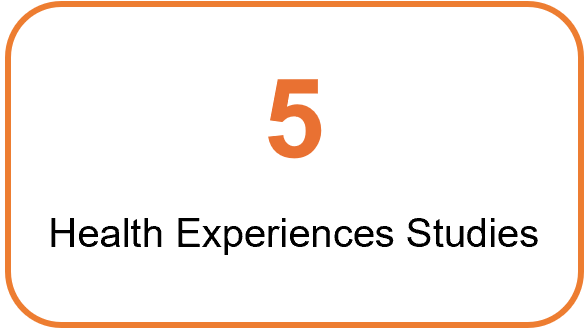
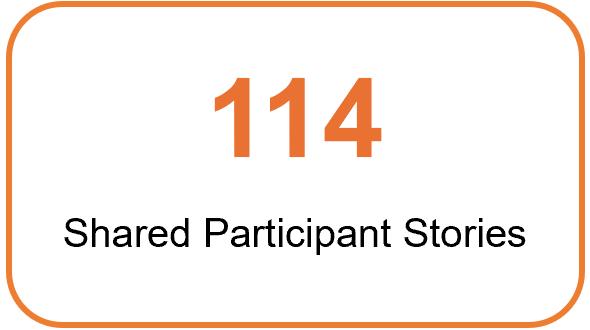
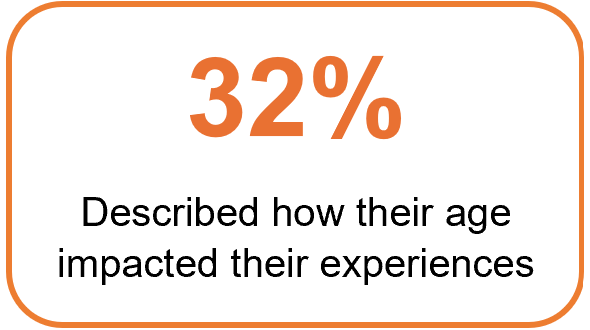
On this pilot page you will find summaries of what young people said about two primary areas: interactions with clinicians and health representation within various communities. Other findings included how age affected insurance coverage, and participants’ own feelings about their age and health.
How Young Age can affect Clinician Interactions:
Young adults appreciate healthcare experiences that are person-centered and age-inclusive, where clinicians approach health concerns with curiosity and validation, communicate directly with them, and support timely testing.
How Young Age can affect Perceptions:
Young adults want to be informed about available resources, connect with others for a sense of community, and see themselves represented within clinical settings.
Possible Future Expansions:
In a module or catalyst film, you could learn about the experiences of many more young adults in greater depth. Additional topics our project advisors suggested pursuing in the future include:
- When is healthcare most affected by young age.
- What clinicians might additionally consider when interacting with younger adults.
- How clinicians can rebuild trust after young adults experience instances where their age negatively affected the care they received.
- How, if at all, ages of clinicians might affect the relationships they have with patients.
Credits:
Kayla Kubehl, MA, was the principal investigator on this project. She obtained the funding, led the secondary analysis, created the montages, and disseminated the research findings. Kayla is a researcher for multiple studies within the Qualitative and Health Experiences Research Lab in the Department of Family Medicine and Community Health at the University of Wisconsin-Madison.
Jane Evered, PhD, RN, served as a co-investigator on this project, assisting with data analysis and participating in all aspects of the project. She is a Scientist within the Qualitative and Health Experiences Research Lab in the Department of Family Medicine and Community Health at the University of Wisconsin-Madison.
Emily Warne, BS, provided oversight for coordination, provided feedback on content, and led web page development on this project. She is the Program Manager for the Qualitative and Health Experiences Research Lab in the Department of Family Medicine and Community Health at the University of Wisconsin-Madison.
Rachel Grob, PhD, MA, provided guidance on data analysis and dissemination. Rachel is a Distinguished Scientist and the Director of the Qualitative and Health Experiences Research Lab at the University of Wisconsin-Madison.
Annette Perry, a study participant, acted as an advisor for this project and provided feedback on development and dissemination of the montages. She is an artist, wife, mother and community advocate with CF. Continuing to bring awareness to how people like her live and thrive with life's challenges.
Makenzie Reynolds, a study participant, acted as an advisor for this project and provided feedback on the development and dissemination of the montages. She is a graduate of Eastern Illinois University with a Master's degree in Health Promotion and Leadership and has been living with Multiple Sclerosis for 17 years.
Acknowledgements:
We wish to thank the participants who shared their stories.
Funding:
Funding for this Young Adults in Healthcare Pilot was provided by a Department of Family Medicine and Community Health Small Grant at the University of Wisconsin-Madison Funded project.
Interviews included in this pilot were drawn from other Health Experiences Research Network studies:
The original Multiple Sclerosis project was made possible by the University of Wisconsin-Madison Institute for Clinical & Translational Research (ICTR) with support from NIH-NCATS Clinical and Translational Science Award (CTSA) 1UL1TR002373 and a strategic grant from the UW SMPH Wisconsin Partnership Program (WPP 4358). The Johns Hopkins Center for Qualitative Studies in Health and Medicine also provided resources to support this initiative.
The original Breast Cancer project was made possible by the UW-Madison Institute for Clinical & Translational Research (ICTR) with support from NIH-NCATS Clinical and Translational Science Award (CTSA) 1UL1TR002373 and a strategic grant from the UW SMPH Wisconsin Partnership Program (WPP 4358); the UW-Madison Office of the Vice Chancellor for Research and Graduate Education with funding from the Wisconsin Alumni Research Foundation; and the Center for Patient Partnerships.
The original Rare and Undiagnosed Diseases project was supported by a grant from the Center of Precision Medicine at the University of Wisconsin-Madison (Grob, PI) and the University of California-San Francisco, through the National Human Genome Research Institute (NHGRI), National Institutes of Health (NIH) under grants K01-HG013687 (Mrig, PI) and R01-HG011792 NIH-NHGRI (Phillips, PI).
The original Long-COVID project made possible by the UW-Madison Institute for Clinical & Translational Research (ICTR) with support from NIH-NCATS Clinical and Translational Science Award (CTSA) 1UL1TR002373 and funds through a grant from the Wisconsin Partnership Program at the University of Wisconsin School of Medicine and Public Health Program, Wisconsin Partnership Program (WPP 5129). Interviews with people with long COVID were funded by a University of Wisconsin-Madison Department of Family Medicine and Community Health Small Grant.
The original Cystic Fibrosis project was supported by the Cystic Fibrosis Foundation – Partnerships for Sustaining Daily Care project.